6 Steps to Ship Compliant Web Chatbots for Enterprises
Implementation first enterprise web chatbot guide: deploy, govern, and test systems; require vendor controls and data residency.
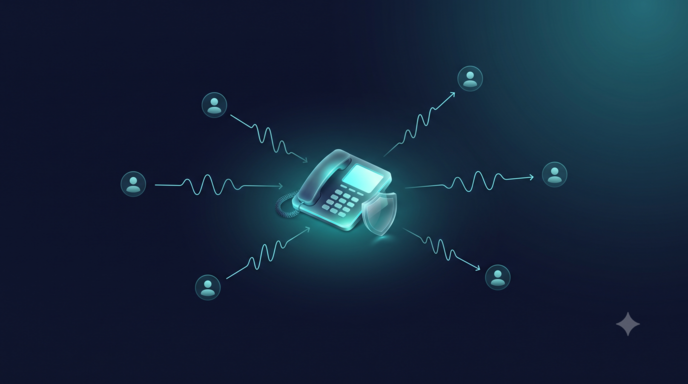
A web chatbot is an embedded conversational interface on a website that automates routine questions, captures leads, and routes complex issues to humans. Deployed correctly, it delivers consistent 24/7 coverage, reduces repetitive support volume, and gives marketing and service teams a structured channel for qualifying visitors. The organizations that benefit most are site owners, support leads, and marketing teams that need scale without proportional headcount growth.
TL;DR:
- Most chatbots rely on knowledge bases from help articles or product data, with integrations to CRM or ticketing systems for personalization and escalation.
- Large language models with retrieval augmentation improve response relevance but require validation, source citation, and restricted content scope to prevent inaccuracies.
- Deployment options include cloud, private cloud, or on-premise, with control over data residency, security, and compliance, especially for regulated industries.
- Success metrics such as deflection rate, lead conversion, time-to-first-response, and resolution rate provide a better performance picture than conversation volume alone.
- Enterprises should prioritize lifecycle governance, including security controls, data policies, and continuous monitoring, for effective and compliant chatbot use.
What a web chatbot is and how it runs on a website
A web chatbot has two working parts: a frontend widget, usually a script tag or embedded iframe placed on a page, and a backend engine that decides what to say. That backend can be a simple rule engine following predefined decision trees, a retrieval system that searches approved content, or a large language model generating open-ended responses. The distinction matters because it determines what the bot can handle: a scripted flow manages predictable dialogs like store hours or password resets, while a retrieval-based or model-driven system can answer novel questions phrased in the visitor’s own words.
Every chatbot needs a knowledge source, and most draw from a mix of help center articles, product pages, structured product data, and manually written question-and-answer pairs curated by a support or content team, as HubSpot’s chatbot builder guidance describes. No-code builders typically deploy through a single script tag or a site-builder integration, which makes them accessible to small teams without engineering support.
Integrations extend what the bot can actually do once a conversation starts. A connection to a CRM lets the bot personalize responses or log a lead. A ticketing integration lets it escalate an unresolved issue with full context attached. Analytics integration turns conversation logs into a record of what visitors ask, which becomes the input for improving both the bot and the website itself.
Core technologies and architectures behind modern chatbots
Modern web chatbots rely on large language models and natural language understanding to detect what a visitor wants and generate a coherent response, replacing the rigid keyword matching of earlier scripted systems. Retrieval-augmented generation, commonly called RAG, grounds those generated answers in an organization’s own approved documents rather than letting the model rely solely on its training data. This grounding improves relevance, but it is not a guarantee of accuracy: enterprises should preserve source citations, restrict what content the retrieval system can pull from, and validate outputs against authoritative material, a discipline the NIST NCCoE chatbot implementation report documents directly from a production prototype.
A separate architectural choice concerns whether the bot simply talks or actually acts. Agentic architectures allow a chatbot to call external APIs, update a record, or complete a multi-step task such as booking an appointment, in contrast to a purely turn-based system that only exchanges messages. Agentic behavior increases capability and increases risk in equal measure, since a bot that can write to a system can also write to it incorrectly.

Deployment location is the final architectural decision, and it carries governance weight beyond convenience. Cloud deployment is fastest to launch. Private cloud and on-premise deployment give an organization direct control over where conversation data lives and who can access it, a distinction that matters for regulated industries where data residency and auditability are contractual requirements rather than preferences.

Types of web chatbots and how to tell them apart
Buyers evaluating vendors or planning an internal build benefit from a simple four-part classification, one echoed in Google Cloud’s overview of chatbot architectures. The categories describe capability, not mutually exclusive products, since a single deployed bot often combines more than one.
- Rule-based or scripted bots follow fixed decision trees and work well for predictable, low-variance questions like business hours or shipping policies.
- AI or LLM-powered chatbots generate natural-language answers and can hold multi-turn context, making them suitable for open-ended support questions.
- Retrieval-augmented bots ground their responses in a defined knowledge base, reducing the risk of an answer that sounds confident but is unsupported.
- Task-oriented or agentic bots go further and complete actions such as booking a demo, updating an order, or calling an external system through an API.
The practical implication for buyers is that a vendor demo showing fluent conversation says little about which category, or combination of categories, is actually running underneath. A bot that answers well in a sales demo may still be purely scripted, which is fine for narrow use cases and a poor fit for open-ended support.
Primary use cases and the outcomes worth tracking
Web chatbots earn their budget through a small set of recurring use cases. Support automation, covering FAQ responses, order status checks, and password resets, is the most common entry point because the questions are repetitive and low-risk. Conversational marketing bots qualify visitors by asking a few structured questions before handing a lead to sales. Appointment and demo scheduling bots connect directly to a calendar system and remove a manual booking step that otherwise costs a sales team time. Internal knowledge search, a less visible but growing use case, applies the same architecture to employee self-service rather than customer-facing support.
- Deflection rate: the share of conversations resolved without human involvement.
- Lead conversion: how many chatbot conversations turn into a qualified sales opportunity.
- Time-to-first-response: how quickly a visitor receives any reply, a metric where automation has an inherent advantage over staffed channels.
- Resolution rate: whether the visitor’s actual problem was solved, not merely answered.
These four metrics, tracked together rather than individually, give a more honest picture of chatbot performance than conversation volume alone.
Implementation checklist: plan, build, test, launch, monitor
Treating a chatbot as a one-time installation is the most common source of later failure. The NIST NCCoE implementation report documents a prototype built with lifecycle testing, access controls, and validation filters rather than a single deployment event, and that sequence generalizes well to enterprise projects.
- Define the job narrowly. Decide what the bot is actually for, set success metrics up front, and write explicit escalation rules for when it should hand off to a human.
- Inventory and permission the content. Catalog every source the bot will draw from and apply least-privilege access so the bot only reaches content it is authorized to use.
- Choose the architecture to match the job. A scripted flow, a retrieval-based system, or an agentic bot each fit different tasks, and the choice should follow the job, not the other way around.
- Connect systems with limited scope. Embed the widget, connect the CRM or helpdesk with least-privilege credentials, and enable logging and audit trails from day one.
- Test beyond the happy path. Run normal questions, ambiguous ones, adversarial prompts, and high-risk scenarios, including red-team testing for prompt injection attacks.
- Monitor on a set cadence. Review KPIs regularly and treat the knowledge base and prompt design as living assets that need continuous updates, not a one-time build.
Pro Tip: Write your escalation rules before you write your first conversation flow. A bot without a clear handoff point will improvise one at the worst possible moment.
Security, governance, and trust controls to require
Chatbot governance is a lifecycle discipline, not a one-time compliance checkbox, and the NIST AI Risk Management Framework frames it exactly that way: risk controls belong across design, deployment, use, and evaluation, not just at launch. Enterprises evaluating a chatbot vendor or an internal build should require a specific set of controls.
- Data retention and training-use policy: know how long conversation data is kept and whether it can be used to train models outside the organization’s control.
- Encryption: data should be encrypted both at rest and in transit, with no exceptions for internal-only systems.
- Identity and access controls: integrations with CRM and ticketing systems should follow least-privilege principles, granting only the access a given workflow needs.
- Audit logs and incident response: every conversation and every system action the bot takes should be logged, with a defined human-review workflow for flagged incidents.
- Retrieval scope and citation preservation: RAG systems should be limited to approved content and should retain source citations so a human can verify any answer.
The NIST NCCoE report documents real risks encountered during its prototype implementation, including prompt injection, hallucination, data exposure, and unauthorized access, with mitigations built around local deployment, access controls, and validation filters rather than any single fix. Organizations in regulated sectors should treat that finding as a baseline expectation, not an edge case, and evaluate vendors against it directly.
Chatbot vs live chat vs hybrid: how to choose
The choice between a chatbot and live chat is fundamentally a staffing decision, not a technology preference, according to Capterra’s analysis of chatbot and live chat software. Live chat depends on available staff and notification reliability, and human agents can typically manage only a handful of concurrent conversations at once. A chatbot has no such ceiling, since it scales to any number of simultaneous conversations, though its usefulness is capped by the quality of its knowledge base rather than staffing.
- Choose live chat first when the team can reliably staff the channel and the product benefits from high-touch, consultative conversion.
- Choose chatbot first when staffing is constrained, when coverage needs to run around the clock, or when the questions are largely repetitive.
- Move to a hybrid pattern once volume grows: the bot handles triage and routine questions, then escalates to a human agent with the full transcript attached.
Pricing structure reinforces the operational trade-off. Live chat tools are commonly priced per seat, so costs scale with headcount. Chatbot platforms are more often metered per conversation or per session, so costs scale with volume instead, which changes the economics as traffic grows.
An enterprise view on omnichannel, deployment, and governance
Enterprise buyers evaluating web chatbots quickly discover that the requirements differ from a simple website widget. VOICERAcx approaches web chat as one channel within a broader omnichannel engagement layer that also spans voice, WhatsApp, SMS, and email, so a conversation that starts on a website can continue on another channel without losing context. For regulated industries, deployment flexibility across cloud, private cloud, and on-premise environments is a governance requirement, not a convenience, since it determines who controls conversation data and where it resides.
Enterprises evaluating a platform at this scale prioritize auditability, role-based access control, and integration depth with existing CRM and telephony systems over conversational polish alone. The outcomes worth measuring go beyond deflection rate to include automation rate across the full customer journey and demonstrable compliance readiness for audit purposes. These priorities separate an enterprise-grade deployment from a marketing-led widget installed for quick wins.
— Voiceracx
Why VOICERAcx is a practical option for enterprise web chatbots
Organizations in regulated industries, or any business managing customer conversations across web, voice, and messaging at once, need more governance than a standalone widget can offer. VOICERAcx’s AI Chat Agents connect web chat with WhatsApp, SMS, and email so a single conversation carries context across channels instead of resetting at each handoff.
For enterprises that need centralized orchestration across every customer touchpoint, Cloud Contact Center brings voice and chat automation together with routing and reporting built in. Businesses with compliance or data residency requirements can evaluate Vee Enterprise, which supports private cloud and on-premise deployment for full data control. Each product line integrates with existing CRM and telephony systems rather than requiring a separate operational silo.
Teams ready to see how omnichannel automation fits their own workflow can request a demo of the VOICERAcx platform and review deployment options directly with the team.
Sources
Readers who want to go deeper into implementation and governance can consult the NIST NCCoE chatbot implementation report for documented security learnings from a real prototype, and the NIST AI Risk Management Framework for lifecycle governance guidance. For practical buyer-side findings, Capterra’s comparison of chatbot and live chat software and G2’s analysis of AI chatbot capabilities and limitations both draw on operational review data. Marketers refining how chatbots surface content can also review Baby Love Growth’s guidance on optimizing content for AI chat systems.
- Developing the NCCoE Chatbot: Technical and Security Learnings from the Initial Implementation
- Chatbot vs. Live Chat Software: Which Do You Need?
- AI Risk Management Framework (AI RMF)
FAQ
What are the top 5 chatbots for websites?
There is no single authoritative ranking of the top five web chatbots, since the best choice depends on whether a business needs simple scripted flows or enterprise-grade governance and omnichannel integration. Evaluate options by architecture type, deployment flexibility, and integration depth with your CRM and helpdesk rather than by a fixed list.
What is the best chatbot for a website?
The best chatbot depends on the job: a scripted flow suits predictable, low-variance questions, while a retrieval-grounded or agentic system suits open-ended support and task completion. Buyers should evaluate vendors on grounding and validation practices, since G2’s review analysis finds that accuracy and hallucination remain the top complaint and that reliability depends on the engineering built around the model, not the model alone.
What are the four types of chatbots?
The four common categories are rule-based bots that follow fixed decision trees, AI or LLM-powered bots that generate open-ended answers, retrieval-augmented bots that ground responses in an approved knowledge base, and task-oriented or agentic bots that call APIs to complete actions, as described in Google Cloud’s chatbot architecture overview. These categories often overlap in a single deployed system rather than existing as separate products.
How is a chatbot different from live chat?
A chatbot automates responses using scripted rules or AI models and scales to unlimited simultaneous conversations, while live chat connects visitors to human agents who can typically handle only a few conversations at once, according to Capterra’s operational comparison. Many businesses adopt a hybrid model where the bot handles triage and routine questions before escalating complex issues to a human agent with the transcript attached.