Migrate Off Open CTI by February 2028: Salesforce Voice for IT and Ops
IT and ops guide to migrating off Open CTI to Salesforce Voice. Compare deployment models, map migration steps, and evaluate Voiceracx for enterprise needs.

For most organizations, Salesforce Voice with Telephony Providers is the fastest path to a unified voice and CRM workspace, since it preserves an existing carrier relationship while moving call data natively into Salesforce. Organizations locked into a specific CCaaS platform or regional PSTN requirement should evaluate Amazon Connect or partner telephony variants instead. Whatever the choice, the decision carries a deadline: Open CTI retires in February 2028.
TL;DR:
- Organizations should choose their Salesforce Voice deployment model based on their existing telephony infrastructure, compliance needs, speed of rollout, and tolerance for vendor lock-in.
- Moving from Open CTI requires a staged migration that includes auditing current features, mapping workflows, configuring Omni-Channel, and testing in small pilot groups before full deployment in 2028.
- VoiceCall records link telephony data to Salesforce objects and enable unified routing through Omni-Channel, improving reporting and agent visibility across voice, chat, and case interactions.
- Combining real-time and bulk transcript data supports both agent assistance during calls and comprehensive post-call analytics, but requires careful pipeline planning.
- Voiceracx offers AI voice and chat agents that integrate seamlessly with Salesforce, providing automation and data control options suitable for regulated industries during transition.
What Is Salesforce Voice Integration?
Salesforce Voice integration refers to connecting a telephony system, whether a carrier, a contact center platform, or Amazon Connect, directly into Salesforce’s native voice architecture rather than through the older Open CTI framework. It replaces the legacy softphone layer with VoiceCall records, native Omni-Channel routing, and built-in transcription. For IT teams researching salesforce voice integration options, the practical question is not whether to move off Open CTI. It’s which of the three deployment models fits the organization’s existing telephony investment, compliance posture, and timeline for change.
Salesforce Voice Deployment Models and When to Pick Each
Salesforce documents three distinct deployment models, and picking the wrong one usually shows up later as rework during rollout, not at signing.
- Native Agentforce Voice: Salesforce hosts the telephony channel directly. This is the fastest route to a unified agent workspace and the best fit for teams starting fresh or replacing an aging CTI setup entirely.
- Salesforce Voice with Amazon Connect: Preintegrated with AWS services, this model suits organizations already running infrastructure in AWS or wanting tighter control over call recording storage and Lambda-based logic.
- Salesforce Voice with Partner Telephony: Keeps your current CCaaS or carrier in place while routing call data into Salesforce’s native model through a certified AppExchange package.
The real decision hinges on four signals: how fast you need to go live, how much vendor lock-in you can tolerate, whether private cloud or on-premise requirements apply, and how much custom Open CTI logic you’re already carrying that would need rebuilding.
How Salesforce Voice Works: VoiceCall Records and Routing
Every call in Salesforce Voice becomes a VoiceCall record, the native object that anchors telephony data the way a Case or Opportunity anchors other business processes. VoiceCall records link directly to Contact, Case, and Account, so a call shows up in the same timeline as emails, cases, and prior interactions instead of sitting in a separate CTI panel.
Routing runs through Omni-Channel, Salesforce’s unified assignment engine. Omni-Channel checks agent presence, queue depth, and skill routing rules, then assigns the call the same way it would assign a chat or case, with fallback logic if no agent is available. That unification is the core value proposition of moving off Open CTI: voice, chat, and case now share one routing brain instead of three disconnected ones.
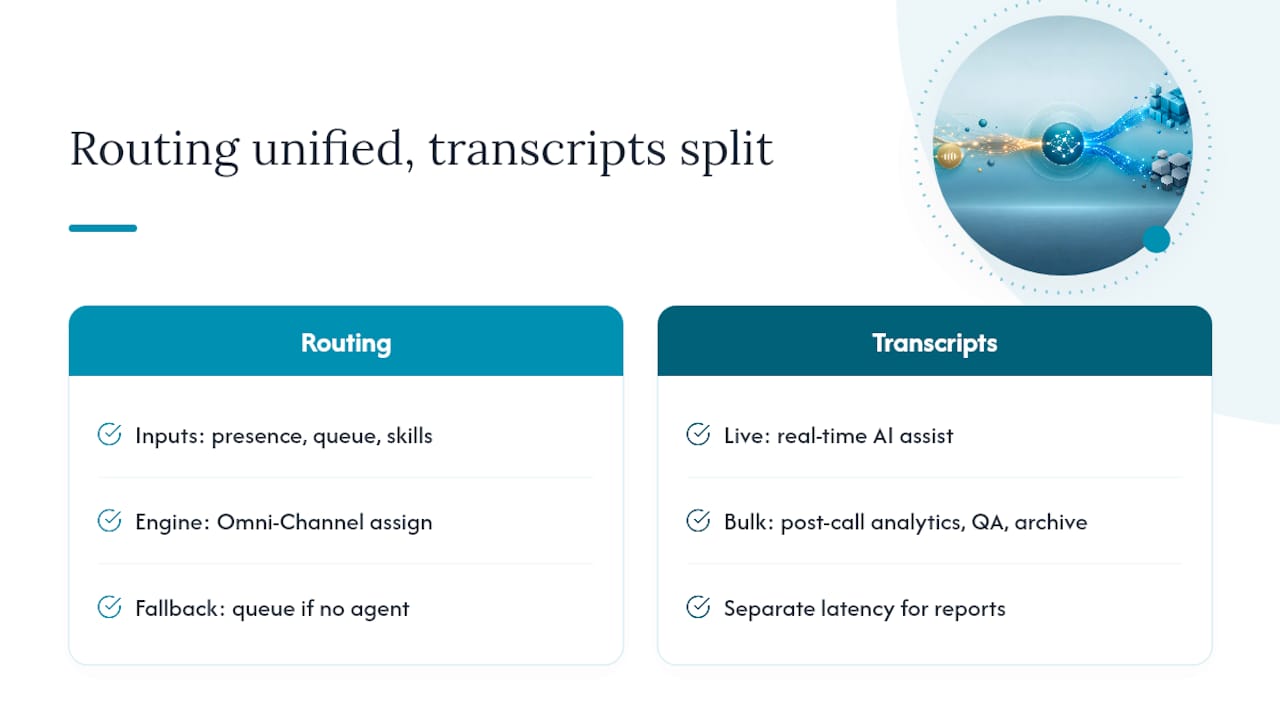
Transcripts and conversation events generate in two ways: live during the call for real-time agent assistance and sentiment surfacing, and in bulk afterward for historical reporting. This split matters operationally. Real-time transcript data feeds AI assistance and supervisor whisper coaching while the call is active. Bulk transcript data, created after the call ends, feeds analytics dashboards, QA scoring, and compliance archiving. Reporting built on VoiceCall records treats these as separate data sources with separate latency, so a dashboard expecting live sentiment scores needs a different data path than one built for end-of-day call volume reports.
Developer and Integration Surfaces to Plan For
IT teams scoping a build need to map four technical surfaces before writing a line of code:
- Telephony Integration REST API, authenticated via JWT, handles VoiceCall creation, updates, and the programmatic hooks that connect a carrier’s call events to Salesforce. Salesforce’s implementation guide includes sample JavaScript for authorization and endpoint usage.
- Voice Toolkit and Connect API power the agent-facing UI, letting you build custom controls into the console rather than relying on a bolted-on softphone widget.
- Transcript and conversation event ingestion, both real-time and bulk, needs a defined pipeline before go-live, since agent-assist features depend on the real-time feed working correctly.
- Lambda integration and Voice Extension LWCs replace custom Open CTI logic; anything built as a legacy softphone extension needs remapping to flows or Voice connector events.
Pro Tip: Run a multiparty call test (warm transfer plus conference) before pilot, since routing and supervisor visibility break most often on edge cases, not standard inbound calls.
Migration Path From Open CTI to Salesforce Voice
Open CTI is deprecated, with retirement set for February 2028. That date is closer than most rollout plans assume once you factor in testing and change management.
A workable migration sequence looks like this:
- Audit existing CTI features and custom logic currently in production, including any softphone customizations.
- Map current Task-based call workflows to the VoiceCall data model, since field-level logic rarely transfers one-to-one.
- Select a partner telephony package or decide to build a custom connector against the REST API.
- Configure Omni-Channel flows, queues, and fallback routing rules before touching production traffic.
- Run a staged pilot with a small agent group and monitor routing accuracy, transcript quality, and supervisor tool behavior.
Salesforce’s own migration learning maps walk through conceptual comparisons between Open CTI and Voice objects, which shortens the audit phase considerably. Teams that need more runway can keep their current telephony provider in place while migrating the data model incrementally through a partner package, buying time without freezing the rest of the project.
Implementation Checklist for a Smooth Rollout
Before flipping the switch on any deployment model, work through these operational tasks in order:
- Provision phone numbers and confirm PSTN routing meets regional compliance requirements for every market you serve.
- Design Omni-Channel flows, including queue structure, skill-based routing, and agent presence states.
- Set recording and transcript retention policy, covering how long data lives, who can access it, and how consent is captured and logged.
- Configure the agent workspace, build a training plan around the new interface, and define pilot KPIs, including average handle time, CSAT, and transcription accuracy.
Security and governance deserve their own line item here rather than an afterthought. Role-based access control on VoiceCall records, encrypted storage for recordings, and audit trails on consent capture all need sign-off from legal or compliance before pilot traffic starts, not after.
Business Benefits and Common Use Cases
Native voice integration’s biggest operational payoff is reporting continuity: every call becomes a VoiceCall record sitting alongside cases and opportunities, which means dashboards, forecasting, and coaching tools all draw from one dataset instead of stitching together CTI logs and CRM exports.
Common use cases fall into four buckets: inbound support calls with automatic transcripts attached to the case record, contextual sales calling where reps see account history before dialing, automated outbound dialing for collections and appointment reminders, and AI voice agents handling routine intents before escalating to a human agent.
The shift teams report most often is fewer tool switches during a call, faster case resolution because context is already loaded, and clearer coaching visibility since supervisors see the same transcript and sentiment data agents do, in real time rather than after a QA review cycle.
Voiceracx’s Approach to Integrating Voice With Salesforce
Native Salesforce Voice covers a large share of standard contact center needs, but organizations running regulated workflows, requiring private cloud or on-premise deployment, or wanting more advanced AI-driven voice automation often need a broader platform layer. Voiceracx provides AI voice and chat agents, contact center automation, and telephony integrations built for exactly that gap, with cloud, private cloud, and on-premise deployment options and enterprise-grade governance controls.
The right fit depends on scale and regulatory exposure. A financial services or healthcare contact center handling sensitive voice data, for example, typically needs more control over data residency than native Salesforce Voice alone provides.
Practical Advice From an Implementer’s Point of View
Speed, control, and compliance rarely align cleanly. Choosing native Agentforce Voice for speed can mean sacrificing the granular data residency control a partner telephony model offers, and that trade-off shows up fastest in regulated industries.
Start with an inventory, not a vendor pitch: catalog every custom CTI feature currently in production before evaluating models. Keep IT, CX operations, and legal in the room from day one, and size the pilot to one queue, not one region, so routing issues surface before they scale.
— Voiceracx
How Voiceracx Accelerates Your Salesforce Voice Integration
If your team is weighing native Salesforce Voice against a heavier build, Voiceracx gives you a third option: AI voice agents that integrate directly with Salesforce’s data model while adding automation the native tools don’t cover on their own.
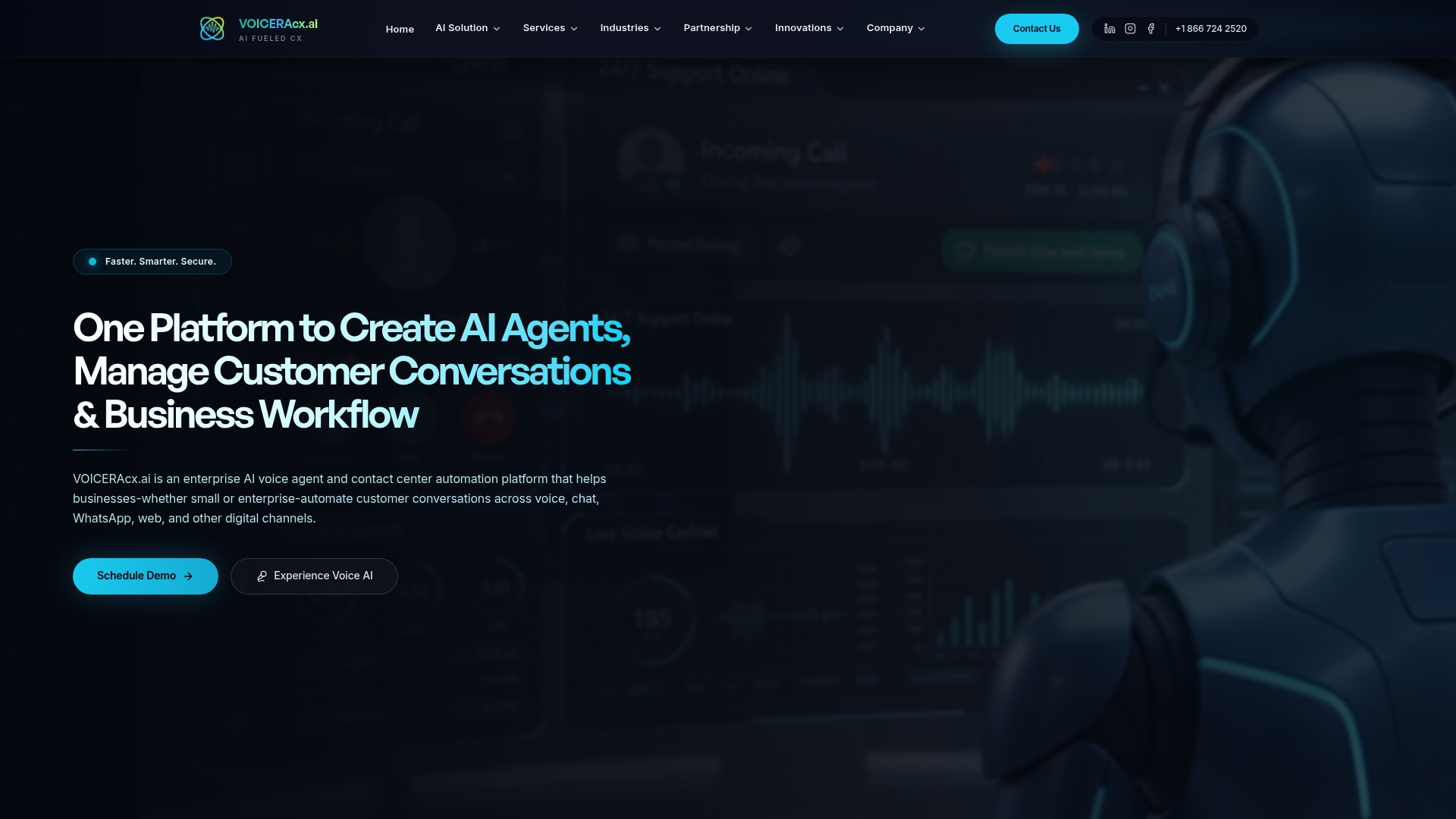
Voiceracx’s AI voice agents handle inbound and outbound calling with CRM context already loaded, so agents and automated flows work from the same VoiceCall and case data instead of a second system. For teams needing chat alongside voice, AI chat agents extend that same context across WhatsApp, SMS, and web. Deployment flexibility, cloud, private cloud, or on-premise, matters most for regulated industries deciding between speed and data control during migration off Open CTI.
If you’re mapping out a Salesforce Voice rollout and want a platform that adds AI automation without giving up governance, request a demo through the AI voice agents page to see how the integration fits your current telephony setup.
Key Docs and Resources Worth Bookmarking
Before scoping any deployment, review Salesforce’s telephony model comparison, the Voice developer implementation guide, and the Open CTI migration guide. For unified customer experience context, this omnichannel primer covers the broader case for cross-channel routing.
Sources
- Choose Your Salesforce Voice Telephony Model | Salesforce Help
- Salesforce Voice with Telephony Providers Implementation Guide | Salesforce Developers
FAQ
How Does Salesforce Voice Work?
Salesforce Voice routes calls through Omni-Channel, creates a native VoiceCall record for every call, and links that record to the relevant Contact, Case, or Account so agents see full context without switching tools.
How Much Does Salesforce Voice Cost?
Pricing varies by deployment model and add-on features like AI voice agents, so check Salesforce’s official pricing pages or talk to an account executive for a current quote rather than relying on a flat number.
Does Salesforce Have a VoIP?
Salesforce Voice supports telephony through native channels, Amazon Connect, or certified partner telephony providers rather than shipping its own standalone VoIP carrier service.
What Happens to Open CTI Integrations After Retirement?
Open CTI is deprecated and set to retire in February 2028, so any integration still running on it needs a migration plan to Salesforce Voice before that date to avoid disruption.
Can an AI Platform Like Voiceracx Work Alongside Native Salesforce Voice?
Yes. Voiceracx’s AI voice and chat agents integrate with Salesforce’s data model, adding automation and omnichannel orchestration on top of the native VoiceCall and routing infrastructure rather than replacing it.
Recommended
- The Cloud CX Advantage: Migrating Customer Experience to the Cloud for Agility and Scalability
- Future-Proofing Your Contact Center: Cloud-Based CX for Peak Performance
- The Future of Customer Interaction: Transitioning from Legacy IVR to Voice AI
- The Agile CX Framework: Adapting Customer Service to Market Shifts with Cloud Solutions