Six step checklist for local presence dialing for sales teams
Six step checklist for local presence dialing: rotation caps, number health monitoring, and carrier attestation to avoid Scam Likely labels.
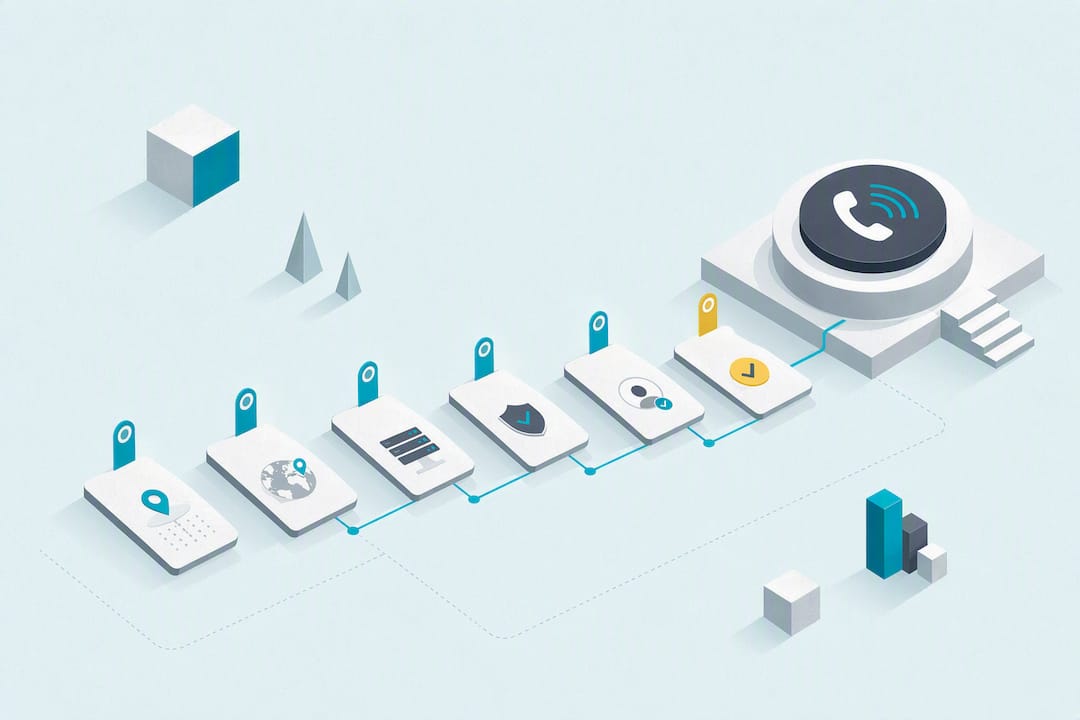
Local presence dialing raises answer rates for outbound teams, but only when the underlying number infrastructure is sound. The technology multiplies whatever hygiene already exists in a dialing program: it accelerates gains for teams running authenticated, owned, well-rotated number pools, and it accelerates burnout for teams that skip those controls. Implementation success depends on three disciplines working together — number-health monitoring, STIR/SHAKEN compliance, and enforced call-volume caps.
TL;DR:
- Effective local presence dialing relies on maintaining a healthy, well-managed number pool with proper owner control, rotation discipline, and daily caps.
- Answer rate improvements depend on accurate caller ID matching, regular number health monitoring, and immediate replacement of flagged or unused numbers.
- Automated platforms like Voiceracx’s AI dialer manage real-time number health, rotation, and compliance, significantly easing operational burdens.
- Building a sufficiently large and diverse number pool for each area, with strict monitoring of answer, block, and complaint rates, prevents rapid caller ID reputation damage.
- Compliance with regulations such as the Truth in Caller ID Act and STIR/SHAKEN is essential, requiring proper registration and verification of all outbound numbers.
What Is Local Presence Dialing, Exactly?
Local presence dialing is a form of dynamic caller ID: outbound calling software automatically selects an outgoing number whose area code or country code matches the number being dialed. Call someone in Denver, and the system displays a 303 number instead of a corporate 800 line or an out-of-state exchange.
The terminology gets used loosely across the industry, so it helps to separate the pieces:
- DID (Direct Inward Dial) refers to the individual phone numbers in a company’s pool.
- Dynamic caller ID is the broader technical term for automatically swapping outbound caller ID based on rules.
- Caller ID rotation describes cycling through numbers within a pool to distribute call volume and avoid overusing any single line.
- Caller ID pool is the full set of DIDs available for a given geographic match.
Legitimate local presence dialing uses numbers the business actually owns and can receive calls on. That distinction matters legally. Spoofing, by contrast, transmits caller ID information the caller has no right to use, often to disguise identity or defraud the recipient. The Truth in Caller ID Act makes it illegal to knowingly transmit misleading caller ID information with intent to defraud, cause harm, or wrongfully obtain something of value. Owning and controlling every number in a rotation pool is what keeps local presence on the right side of that line.
How Local Presence Dialing Works Behind the Scenes
Every local presence call runs through the same basic decision sequence before it ever rings:
- Detect the destination. The dialer reads the area code (U.S./Canada) or country code (international) of the number being called.
- Query the caller ID pool. The system matches the destination against available DIDs, typically formatted per the E.164 international numbering standard and, for international operations, cross-referenced against ISO 3166 country codes.
- Select an available number. Selection logic picks a healthy, matching DID from the pool, factoring in recent usage and reputation status.
- Set the outbound caller ID and place the call. The chosen number displays to the recipient as the call connects.
Contact centers build this logic in a few common ways. Some dialers handle selection natively at the platform level. Others configure it inside PBX callflows using rule-based matching, an approach documented in platform guides for dynamic caller ID configuration that rely on regex or feature-code rules. A third pattern, common in cloud contact centers, uses a serverless function: Amazon Connect’s documented approach uploads a JSON caller ID list to S3, invokes a Lambda function to pick the outbound number by country or area code, and passes that selection into the contact flow.
Number ownership isn’t optional in any of these setups. A recipient who calls back needs to reach a working line, and CNAM (Caller ID Name) lookups depend on the number being properly registered to the business placing the call.
Does Local Presence Actually Increase Answer Rates?
The behavioral case for local presence is straightforward: most people don’t pick up calls they don’t recognize. Pew Research found that a majority of U.S. adults avoid answering calls from unknown numbers altogether. A local area code reduces that instinctive hesitation because it looks like a neighbor, a local business, or someone from the same community rather than a distant call center.
Industry vendor analyses suggest local presence can significantly increase answer rates when run on healthy, well-managed number pools, according to industry commentary on local presence effectiveness. Results vary depending on infrastructure and conditions. It came from controlled comparisons on properly maintained infrastructure, and results vary by industry, list quality, and carrier filtering behavior.
What actually drives the gain, or kills it:
- Number health and how recently a DID has been flagged or blocked.
- Rotation discipline that spreads volume instead of hammering the same numbers daily.
- List hygiene, since dialing bad or recycled numbers burns caller ID reputation fast regardless of area code match.
- Message and offer quality, which affects whether an answered call converts into anything worth having.
Building a Number Pool That Doesn’t Burn Out
Pool size and rotation cadence are where most local presence programs succeed or fail. Undersized pools get flagged within weeks. Oversized, unmonitored pools waste money without adding protection.
Recommended baseline: maintain at minimum several dedicated numbers per active area code, following the pool-sizing guidance common across platform best-practice documentation, and scale that count up in higher-volume markets. A single number covering a busy metro area code will get burned quickly no matter how good the list underneath it is.
Daily caps matter just as much as pool depth. Enforce a strict per-number daily call ceiling and space calls throughout the day rather than firing them in bursts, which is one of the fastest ways to trigger carrier filtering. Carrier reputation systems track call volume, answer and block rates, and complaint signals, and they label numbers as spam once behavior patterns look abusive.
Monitor three signals continuously:
- Answer rate per number, watched for sudden drops.
- Block rate, meaning how often carriers intercept or label the call before it rings through.
- Complaint rate, which reflects recipient-reported spam flags.
Make every number in the pool inbound-callable, and register CNAM entries where the carrier supports it, since an unreachable callback number undercuts the entire premise of looking local. Replace flagged numbers immediately rather than letting them sit in rotation dragging down pool averages.
Retire a number promptly when its answer rate declines significantly below the pool average for multiple consecutive days to avoid damage.
Implementation Checklist for Rolling This Out Safely
Sales operations teams tend to under invest in the setup phase and over invest in fixing problems afterward. A disciplined rollout looks like this:
- Inventory existing numbers. Catalog every DID currently in use and map each to an area code or country.
- Build the selection logic. Whether through a dialer’s native rules engine or a custom pattern like the Lambda-based JSON list approach AWS documents, define exactly how numbers get matched and picked.
- Test failover behavior. Confirm what happens when no matching local number is available, since a broken fallback can default to an unregistered or unauthenticated line.
- Register for STIR/SHAKEN attestation. Work with your carrier or platform provider to ensure every pool number carries proper caller ID verification, which affects whether calls display as verified or get flagged before they connect.
- Confirm carrier acceptance. Not every carrier accepts every number for outbound display; verify this before scaling volume.
- Set monitoring thresholds and alerts. Define automatic alerts for answer-rate drops, rising block rates, or complaint spikes.
Local presence never removes consent obligations. The Truth in Caller ID Act governs the caller ID itself, while TCPA rules and Do Not Call list obligations govern who you’re allowed to call and how. A locally displayed number on a call to someone on the DNC registry is still a compliance violation.
When Local Presence Backfires
The warning signs are consistent: a sudden answer-rate drop, a spike in complaint or block rates, or numbers picking up “Scam Likely” or similar carrier labels. Any of these signals means the pool is being over dialed relative to its size, or the list underneath it has gone stale.
When that happens, act fast:
- Pause the affected numbers immediately rather than continuing to dial through a flagged DID.
- Redistribute volume across the healthier remainder of the pool.
- Notify the carrier if a number appears mislabeled and update CNAM registration if it’s inaccurate or missing.
- Increase pool depth for that area code and lower daily caps across the board.
- Re-verify STIR/SHAKEN attestation, since a lapse there often coincides with a labeling problem.
Recovery isn’t instant. Track answer rate on the affected numbers over one to two weeks after remediation. A steady climb back toward the pool’s baseline confirms the reputation is rebuilding; a flat line means the underlying volume or list problem hasn’t actually been fixed.
How Enterprise Dialers Automate These Controls
Manually managing pool health, rotation, and STIR/SHAKEN status across hundreds of numbers isn’t realistic for teams running high call volumes. Enterprise platforms handle this through automated, AI-driven number selection that continuously prefers the healthiest available DID rather than relying on static rules.
That automation typically covers:
- Real-time number-health scoring that removes or de-prioritizes flagged DIDs automatically.
- CRM sync so caller ID selection reflects the account’s region without manual mapping.
- Callflow integration patterns similar to the Lambda-based selection AWS documents, but managed through a platform interface instead of custom code.
- Dashboards tracking answer rate, block rate, and complaint rate by number and by pool.
Voiceracx’s AI outbound dialer applies this model, pairing number-health automation with the kind of speech analytics and monitoring detailed in Voiceracx’s work on speech recognition in contact centers, and connecting the whole pipeline into existing CRM and contact center automation workflows.
What Sales Leaders Should Actually Prioritize
Skip the temptation to roll local presence out everywhere at once. Start with one or two pilot segments and run them against a control list dialed the old way, so the lift is measured, not assumed. Number health has to be the gating factor before any scaling decision, since a wider rollout on a shaky pool just burns more numbers faster.
Answer rate is a leading indicator, not the goal. Track booked meetings and closed deals against the pilot, because a program that lifts pickups without moving pipeline isn’t worth the operational overhead of managing it.
— Voiceracx
Put Local Presence on Autopilot With Voiceracx
Running local presence dialing well means managing dozens or hundreds of numbers, watching health scores daily, and staying ahead of carrier filtering, all while your team is supposed to be selling. This platform handles that operational load automatically instead of asking a sales manager to babysit a spreadsheet of number reputations.
The AI Outbound Dialer selects the healthiest available number for every call, rotates pools automatically, and feeds answer-rate, block-rate, and complaint data into dashboards your team already monitors. It connects to your existing CRM so number selection reflects account territory without manual configuration, and it supports the enterprise deployment models regulated industries need, including private cloud and on-premise options. If you’re running outbound at real volume and want local presence that doesn’t erode into “Scam Likely” labels within a month, request a demo of the AI Outbound Dialer and see how the number-health automation works against your own call patterns.
Sources
- Most Americans don’t answer calls from unknown numbers — Pew Research Center
- Truth in Caller ID Act (public law text)
- Twilio Help Center: Caller ID and verification guidance
- Configure dynamic outbound caller ID in Amazon Connect (AWS Knowledge Center)