8 Week Call Deflection Pilot for CX Leaders to Prove Resolution
Run an 8 week, resolution first call deflection pilot for CX leaders. Track confirmed resolution and recontact rate, and keep conversation context with...
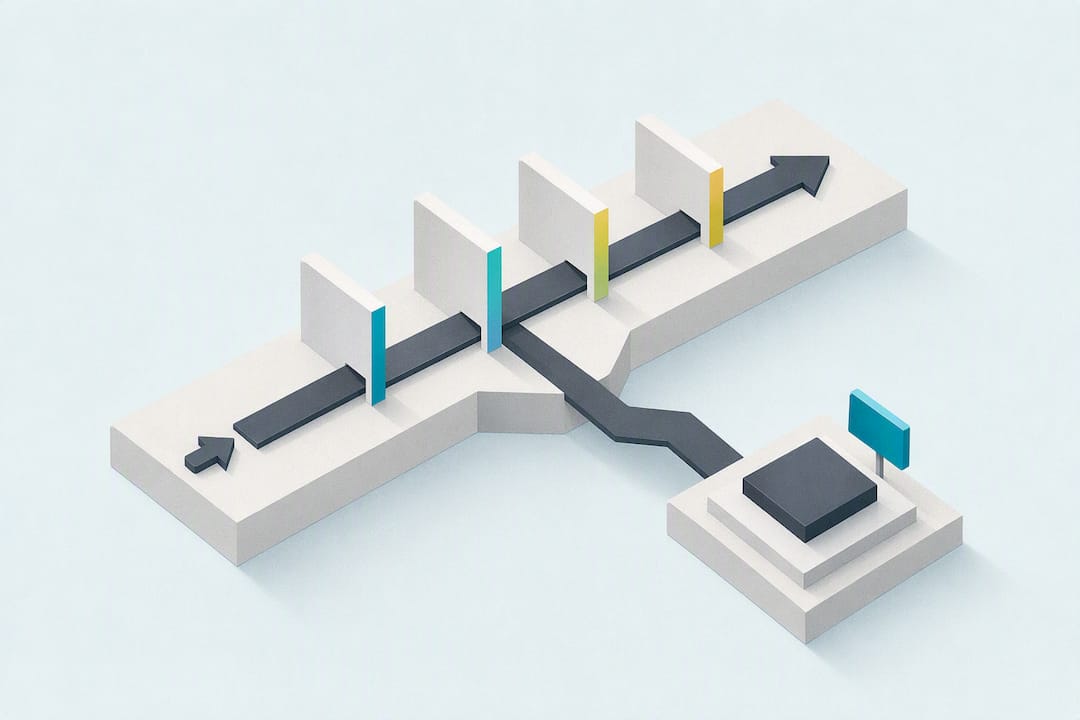
Call deflection routes callers to the channel most likely to resolve their issue without a live agent, whether that’s a knowledge base article, an SMS link, or an AI voice agent. The strategy only works when success is measured by confirmed resolution and re-contact rate, not raw call reduction. Enterprises that optimize for fewer rings instead of resolved issues typically end up with frustrated customers calling back anyway.
TL;DR:
- High-impact call deflection strategies prioritize proactive notifications and structured self-service to prevent unnecessary calls before they happen.
- Measuring success requires tracking confirmed resolution and re-contact rates, not just deflection or avoided calls, to ensure issues are genuinely resolved.
- Common failures include poorly mapped resolution paths, missing escalation options, and optimizing only for call volume reduction rather than actual customer outcomes.
- Building a pilot involves analyzing top call drivers, designing clear resolution flows, and monitoring these metrics over 6 to 8 weeks to identify and fix broken processes.
- A platform like Voiceracx supports context continuity across channels and handles high-volume, narrow intents, aligning technical capabilities with outcome-driven measurement.
What Is Call Deflection, and Why Does Resolution-First Matter?
Call deflection is the practice of routing customer contacts away from live agents toward channels that can resolve the same issue independently, before or during the queueing process. The common destinations include knowledge bases, IVR self-service menus, chatbots, SMS links, and proactive notifications, and Qualtrics documents these as the standard toolkit for reducing strain on contact centers.
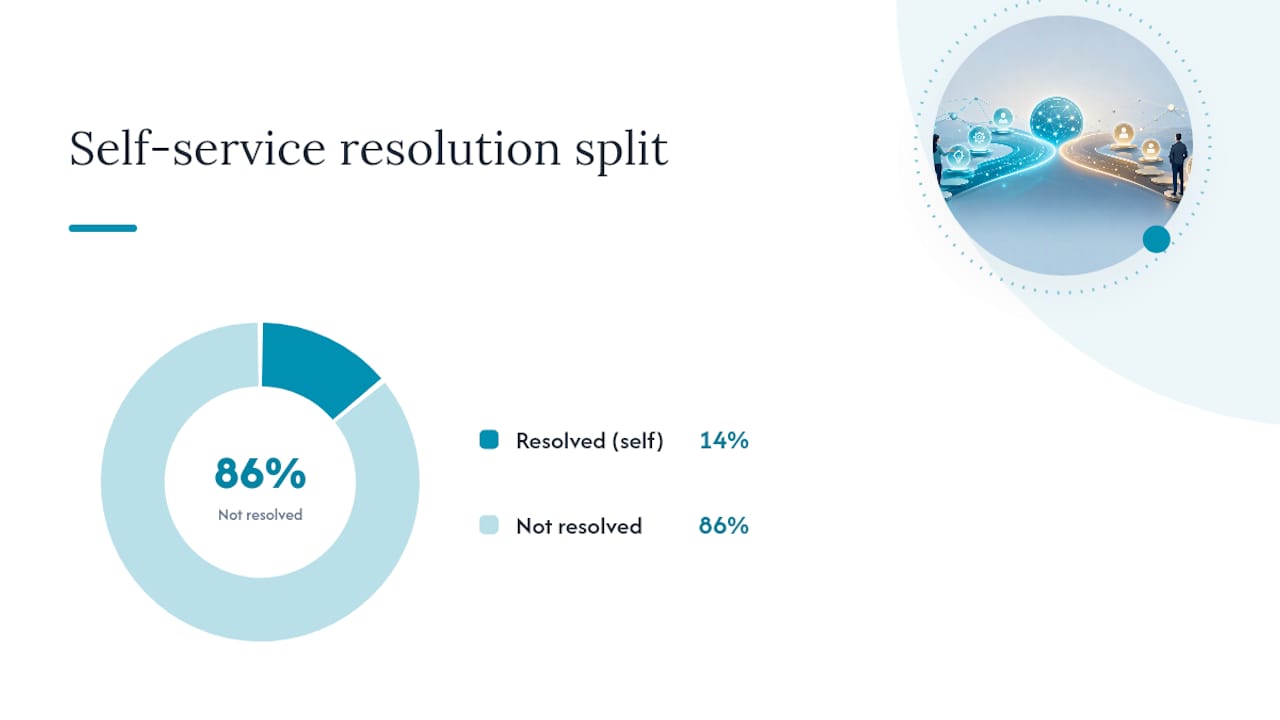
The problem is that most deflection programs stop at counting avoided calls. That number looks great in a quarterly report and means almost nothing if the customer never actually got their issue fixed. Gartner’s survey found that only 14% of customer service issues are fully resolved in self-service, which means the other 86% either escalate, get abandoned, or generate a repeat contact later.
Two scenarios illustrate the gap:
- Avoidance: A caller hits an IVR menu, gets sent to a generic FAQ page, gives up, and calls back the next day angrier than before.
- Resolution: The same caller gets a one-click SMS link to the exact article that answers their question, confirms it solved the problem, and never calls again.
Core Call Deflection Strategies, Ranked by Leverage
Not every deflection tactic delivers the same return. Some prevent calls before they happen; others just make the call itself shorter. Building in the wrong order wastes budget on low-impact fixes while the highest-leverage tactic sits untouched.
- Proactive notifications first. Automated SMS and email updates for order status, shipping delays, or appointment reminders prevent calls from ever being placed, which makes this the single highest-leverage tactic available before you build anything reactive.
- Reactive self-service second. A well-organized knowledge base, in-product help widget, and visual IVR menu catch the customers who still come looking, provided the content actually matches how customers phrase their questions.
- Conversational automation third. AI voice agents and chatbots work best on narrow, high-volume intents like password resets or order tracking, not open-ended troubleshooting. Practitioner guidance on narrow-intent pilots backs this sequencing.
- IVR modernization fourth. Rebuild the phone tree to present self-service and one-click text links before offering a queue position, not after.
- Messaging channels fifth. WhatsApp, SMS, and in-app chat work well as deflection destinations when the interaction needs a written record or asynchronous back-and-forth, such as claim status updates or appointment changes.
- Intent mapping last, but continuously. Rank customer questions by resolution safety. Order status, password resets, and appointment changes deflect cleanly. Billing disputes and account fraud rarely do.
Pro Tip: Start your intent map with the three questions your IVR transfer logs show most often. If those three don’t have a clean self-service path yet, no amount of chatbot polish elsewhere will move your numbers.
Messaging automation built on triggers, similar to the workflow logic covered in this marketing automation checklist, can be adapted directly for proactive deflection sequences.
How Do You Measure Call Deflection Success?
Deflection rate is the easiest number to calculate and the least useful one on its own. The formula is simple: (contacts deflected ÷ total contacts) × 100. If your contact center handles 10,000 contacts a month and 3,000 never reach an agent, your deflection rate is a significant portion of contacts.
That number tells you nothing about whether those 3,000 customers got what they needed. Confirmed resolution rate closes that gap: it tracks the share of deflected contacts where the customer explicitly confirmed their issue was solved, through a survey prompt, a “yes, that answered it” button, or the absence of a follow-up contact within a set window. Re-contact rate measures the inverse, the percentage of deflected customers who call back within 24 to 72 hours on the same issue.
| Metric | What it measures | Why it matters |
|---|---|---|
| Deflection rate | Share of contacts avoiding a live agent | Cost and volume signal only |
| Confirmed resolution rate | Share of deflected issues actually solved | The real success metric |
| Re-contact rate | Deflected customers who call back | Flags broken self-service paths |
| CSAT by channel | Satisfaction score per contact channel | Reveals which channels underperform |
| FCR / ASA | First contact resolution / average speed to answer | Standard contact center health checks |
Instrumentation matters as much as the formulas. Assign a persistent conversation ID that follows the customer from SMS to chatbot to live agent, and link it to your CRM record. Without that continuity, you can’t tell whether the customer who called back was the same one you “deflected” yesterday, and you lose the ability to calculate re-contact rate at all.
What Makes Call Deflection Programs Fail?
Most failures trace back to the same handful of design mistakes, and nearly all of them are fixable before launch rather than after customers start complaining.
- No resolvable destination. The IVR deflects to a generic FAQ homepage instead of the specific article that answers the question, so the customer searches, gives up, and calls back.
- Optimizing for avoidance, not outcomes. Teams get rewarded for lower call volume, which quietly incentivizes making it harder to reach a human rather than easier to get resolved.
- Broken escalation. The chatbot has no visible path to a live agent, so frustrated customers either abandon the channel entirely or flood social media instead.
The fixes are operational, not exotic. Test every new deflection flow against a narrow set of intents before wide release, keep a visible human fallback option on every screen, and carry the full conversation context when a customer does escalate, so they never repeat themselves. Behavioral research on task switching supports why repeated context loss frustrates customers disproportionately compared to the actual wait time.
Pro Tip: Set a standing weekly review of re-contact rate by intent. A spike in one specific category almost always means a content page went stale or a recent product change broke a self-service flow.
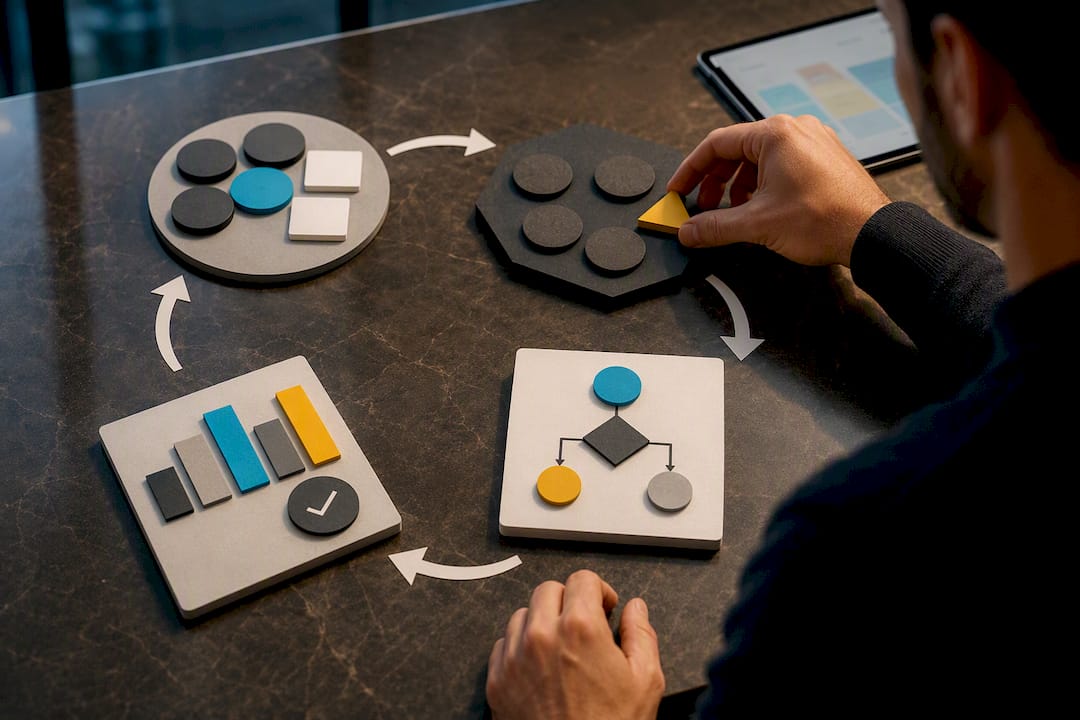
Governance should include a content refresh cadence, since knowledge base articles that answered questions correctly six months ago can quietly go wrong after a policy or pricing change.
Building an 8-Week Call Deflection Pilot
Launching deflection enterprise-wide without testing first is how avoidable failures scale fast. A structured pilot catches the breaks while the blast radius is still small.
- Analyze call drivers. Pull the last 90 days of contact reason codes and identify the two or three highest-volume, most resolvable intents.
- Map resolution paths. Build the actual flow for each intent, whether that’s an IVR branch, an SMS link, a chatbot script, or an in-product help panel.
- Instrument before launch. Wire up deflection rate, confirmed resolution rate, and re-contact rate tracking with persistent conversation IDs tied to your CRM.
- Run the pilot for 6 to 8 weeks. Upriser’s practitioner guidance recommends this window as long enough to surface stability trends without dragging out a low-performing flow.
- Monitor daily during the pilot. Watch for re-contact spikes, which surface within days when a flow is broken.
- Set scale criteria upfront. Define the confirmed resolution threshold and CSAT floor that must be hit before expanding the pilot to additional intents.
How VOICERAcx Supports Resolution-First Deflection
Enterprise deflection programs need more than a chatbot bolted onto an old IVR. They need a platform that keeps context intact as a conversation moves from a text link to a bot to a live agent, and that holds up under the compliance requirements regulated industries carry.
- AI voice agents handle narrow, high-volume intents like appointment changes and order status without a live agent, matching the intent-mapping approach covered above.
- InteractFlow orchestration carries customer context across voice, SMS, WhatsApp, and web so no one repeats themselves during escalation.
- The Vee Lite insurance claims support case study shows this context continuity applied to a regulated, high-stakes workflow.
- Deployment options span cloud contact center infrastructure, private cloud, and on-premise, which matters for enterprises with strict data residency or governance rules.
Prioritize Outcomes, Then Efficiency
Resolution-first deflection is the only version of this strategy that survives contact with real customers. Volume metrics flatter a dashboard; confirmed resolution and re-contact rate tell you what actually happened. Pilot with those two numbers first.
— Voiceracx
Ready to Pilot Resolution-First Deflection?
Most deflection tools sell you volume reduction and leave resolution tracking as an afterthought bolted on later. The platform can support tracking of confirmed resolution and re-contact metrics to help evaluate whether your pilot is working. Whether you’re routing narrow intents to an AI voice agent, extending self-service into WhatsApp and SMS with AI chat agents, or running the whole stack through a regulated deployment on the enterprise conversational AI platform, context carries with the customer at every handoff.
If your contact center is planning an 8-week pilot, start by reviewing the contact center automation page and request a walkthrough of how InteractFlow tracks resolution rate against your actual call drivers, not just call volume.
Sources
- Gartner press release: Survey finds only 14% of customer service issues are fully resolved in self-service
- Qualtrics: Call deflection — reduce customer calls for increased efficiency
- Upriser: Call deflection strategies that actually resolve, not just redirect
FAQ
What Is Call Deflection?
Call deflection routes a customer’s issue away from a live agent toward a channel like self-service, chat, or SMS that can resolve it independently. Done well, it’s measured by confirmed resolution and re-contact rate, not just how many calls got avoided.
What Is an Example of Successful Call Deflection?
A retailer sends an automated SMS with tracking details before a customer even thinks to call about a delayed order, preventing the contact entirely. That’s the highest-leverage version, since it deflects the call before it starts rather than redirecting it mid-queue.
How Do You Handle a Customer Who Keeps Getting Deflected Without Resolution?
Make the human fallback visible at every step of the self-service flow, and carry full conversation context to the agent so the customer never has to repeat their issue. A broken escalation path is one of the most common reasons deflection programs generate complaints instead of savings.
Is Call Deflection the Same as Ignoring Customer Complaints?
No. Call deflection aims to resolve the customer’s issue through a faster channel, not to avoid addressing it. Programs that optimize purely for reducing call volume instead of confirmed resolution are the ones that end up feeling like avoidance to customers, which is exactly the failure mode resolution-first deflection is designed to prevent.
Recommended
- Solving the CX Puzzle: Strategy, Consulting and Technology for Better Customer Experience
- Future-Proofing Your Contact Center: Cloud-Based CX for Peak Performance
- The ROI of Superior CX: Calculating the Business Value of Advanced Customer Engagement
- The Agile CX Framework: Adapting Customer Service to Market Shifts with Cloud Solutions