AI Governance Framework: A Practical Guide for Enterprises
How to build an enterprise AI governance framework: policy, model, roles, lifecycle controls, risk management and vendor diligence for regulated customer operations.

An AI governance framework is the set of roles, policies, lifecycle controls and monitoring routines that determine who may deploy AI, under what conditions, and how the organization proves that the system behaves as intended. For enterprises that run customer-facing voice and chat agents, the framework is only as strong as the platform beneath it: governance that exists in a policy document but cannot be enforced through access control, audit trails, data residency and deployment choices remains aspirational. This guide explains the components of a working framework, how it differs from an AI governance policy and an AI governance model, and how to apply it to customer service automation.
TL;DR
- A framework is the whole system of responsibilities and lifecycle processes; a policy is one rule set inside it; a model is the structure that assigns decision rights.
- Start from an AI inventory, assign one accountable owner to each use case, and gate every deployment with an impact assessment, testing and approval.
- Align to recognized references such as the NIST AI Risk Management Framework instead of building separate regional programs.
- Customer-facing AI needs enforceable controls in the platform: role-based access, audit trails, human handoff, analytics and a deployment option that matches your data obligations.
- Treat suppliers as part of the framework, with diligence on data practices, model changes, subcontractors, audit rights and incident notification.
What an AI governance framework is, and how it differs from a policy or a model
The three terms are often used interchangeably, and that causes real confusion when a program is designed. A practical guide from the law firm Bird & Bird describes governance as connected arrangements across strategy, roles, system assessments, documentation, monitoring and oversight. Read that way, the terms separate cleanly:
- Framework: the complete structure, covering principles, accountability, lifecycle processes, controls and evidence.
- Policy: a written rule within the framework, for example which data may be sent to a model, or when a conversation must be transferred to a human.
- Model: the organizational design that assigns decision rights, such as a central committee, a federated structure with business-unit owners, or a hybrid.
A policy without a framework produces rules nobody operationalizes. A framework without a policy produces processes with no standard to test against. Enterprises need both, plus an operating model that says who decides.
Why governance belongs at board and executive level
AI governance is frequently delegated to engineering or compliance alone. INSEAD’s corporate governance centre sets out five principles for board oversight, including strategic oversight for long-term value creation and active oversight of technology and security. The implication is that AI is a strategic and risk matter, not only a technical one.
For customer operations the point is concrete. A voice agent that mishandles a payment conversation, discloses personal data or gives an unsupported answer creates regulatory, financial and reputational exposure at once. Executive sponsorship ensures that the people who accept the risk are the people who see it.
Core components of an enterprise framework
Japan’s AI Safety Institute published a practical manual for establishing AI governance in March 2026. Its components translate well to any enterprise and can be grouped as follows.
1. Inventory and ownership
Every AI use case is recorded, and each has a named responsible owner. The manual also recommends that a chief AI officer standardize how assessments are designed and give final approval. In a contact center, the inventory would list each voice agent, chat agent, outbound dialer campaign, email automation and quality-assurance model, along with the systems and data each one touches.
2. Impact assessment and risk register
Before deployment, each use case is assessed for its effect on customers, and the findings go into a risk register. A collections call carries different risk from an appointment reminder, and the assessment should reflect that difference.
3. Lifecycle gates and testing
The manual describes gates through the lifecycle, with tests for performance, robustness, fairness, explainability, security and privacy, followed by formal approval. Nothing reaches production because a team is enthusiastic; it reaches production because it passed defined criteria.
4. Monitoring, audit and documentation
After launch, systems are monitored, audited and documented through artifacts such as model cards and datasheets. Bird & Bird observes that continuous monitoring, measurable indicators and thresholds for human intervention are areas where organizations commonly remain immature. Customer conversations generate the data needed to close that gap, provided it is recorded and analyzed.
Choosing an AI governance model
The operating model determines how quickly decisions are made and how consistently they are applied. The University of Technology Sydney’s guide to designing AI governance structures recommends cross-functional membership so decisions are well rounded and teams receive clear guardrails.
| Model | How decisions are made | Suits |
|---|---|---|
| Centralized | One committee approves every use case | Highly regulated organizations with few AI deployments |
| Federated | Business units own use cases within central standards | Large enterprises with many channels and regions |
| Hybrid | Central standards and approval for high-risk uses; unit-level approval for low-risk uses | Most contact center environments |
Bird & Bird also advises tailoring governance to organizational size, industry, supply-chain role and regulatory environment, noting that buying, building, selling or internally using AI creates different responsibilities. An enterprise that buys a voice agent platform and configures it for customers still carries the obligations of the party that deploys it.
A workable committee for customer service AI typically includes operations, IT and security, legal and compliance, a customer experience leader and a data protection representative.
Which references to align with
Enterprises rarely need to invent a framework from nothing. Kroll distinguishes between OECD and UNESCO principles, ISO/IEC 42001, the NIST AI Risk Management Framework and the UK Government AI Risk Management Toolkit, and recommends a unified operating model grounded in international principles rather than separate regional programs. That approach reduces duplicated effort when the same agent serves customers in several countries.
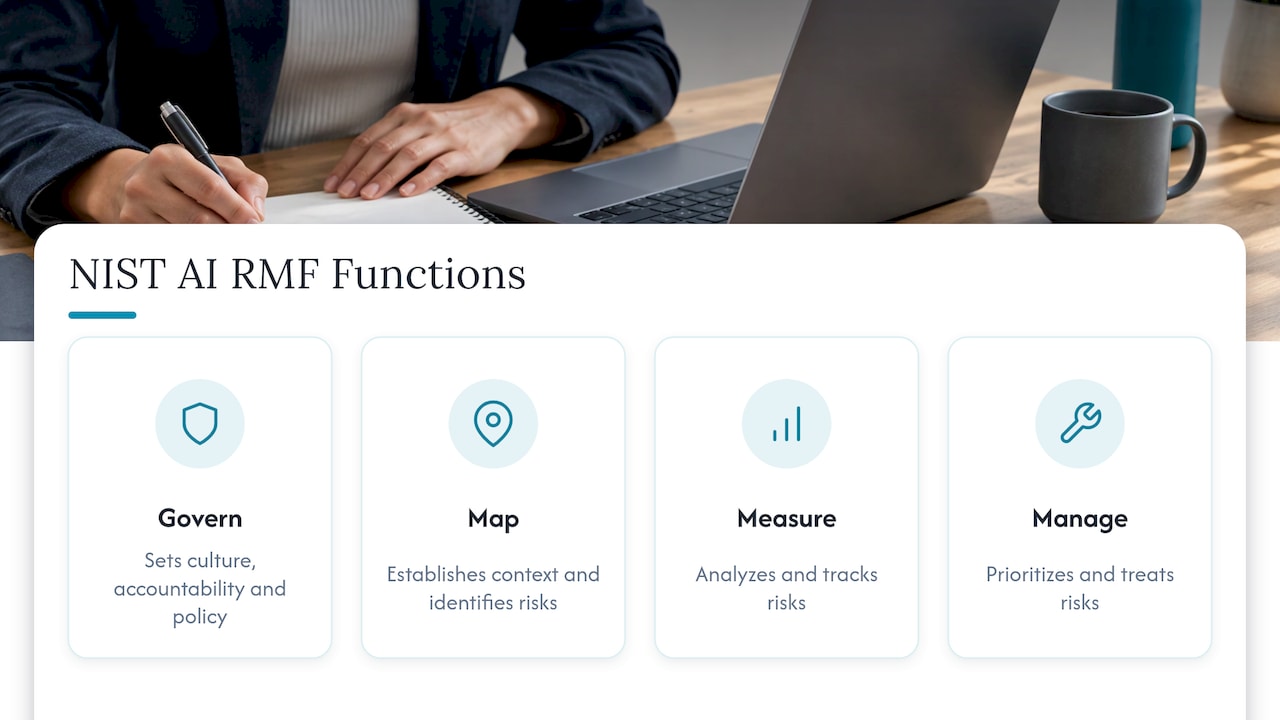
For US organizations, the most common anchor is the NIST AI Risk Management Framework, whose core is built on four functions: govern, map, measure and manage. Govern sets culture, accountability and policy; map establishes context and identifies risks; measure analyzes and tracks them; manage prioritizes and treats them. These functions map directly onto the inventory, assessment, testing and monitoring components above.
Regulation is a separate layer from voluntary frameworks. The EU AI Act, for example, entered into force on 1 August 2024 and applies risk-based obligations with defined roles for different actors. Application dates for individual obligations differ, so legal teams should confirm the current timetable in the official text and in each jurisdiction where customers are served. Privacy, consumer protection, employment and sector-specific rules apply alongside any AI-specific law.
Writing the AI governance policy
A policy should be short enough to be read and specific enough to be tested. For customer-facing AI, the following clauses carry most of the weight:
- Permitted use cases and prohibited uses, by channel and customer segment.
- Data handling: what data agents may access, where it is processed and stored, and how long recordings and transcripts are retained.
- Disclosure: when and how customers are told they are interacting with an automated agent.
- Human oversight: the conditions that trigger transfer to a person, and who receives the transfer.
- Knowledge sources: the approved content an agent may use to answer, so that responses stay grounded.
- Change control: who approves changes to prompts, workflows, knowledge and integrations.
- Incident response: what counts as an AI incident, who is notified, and within what time.
Each clause should name an owner and a measurable indicator. A clause that cannot be measured cannot be audited.
Managing risk in customer-facing AI
The Japan AI Safety Institute recommends a cycle of identifying, analyzing, evaluating and treating risks, with stronger controls such as human oversight and vendor risk assessment for uses that affect rights or safety. In a contact center, several risks recur.
- Inaccurate answers. Agents must be grounded in approved content. Our articles on reducing AI hallucination in enterprise customer service and on knowledge base integration for enterprise chat cover the controls in detail.
- Privacy and data location. Recordings and transcripts often contain personal and payment data. Residency requirements should be translated into technical controls, as discussed in data residency compliance for regulated teams.
- Outbound contact compliance. Dialer campaigns require rules on calling windows, consent and escalation, covered in our guide to enterprise AI outbound dialers.
- Quality drift. Sampling a small share of calls leaves most interactions unreviewed. Quality assurance automation extends review to full coverage.
- Scaling without control. More channels multiply the number of places where policy must hold; see enterprise chatbot scaling for architecture and governance considerations.
Supplier governance
Most enterprises will buy AI capability rather than build it, which makes supplier assessment part of the framework. Bird & Bird recommends AI-specific diligence and ongoing assurance, including scrutiny of data practices, model changes, subcontractors, incident history, audit rights and notification terms. A supplier questionnaire built around those six areas gives procurement a defensible baseline. Teams that also buy on-premise infrastructure apply the same discipline to hardware, for example when sourcing government and education AI workstations and servers.
Contract terms should state who may change a model or subprocessor, how much notice is given, and what evidence the enterprise can inspect.
Why the platform decides whether governance holds
A framework is enforced at the point where conversations happen. Four platform capabilities matter most for customer service automation:
- Deployment control. Cloud, private cloud and on-premise options allow the deployment to match the organization’s data obligations. Our comparison of cloud and on-premise contact centers for regulated organizations sets out the trade-offs against NIST-aligned requirements.
- Access and audit. Role-based access control and audit trails make accountability verifiable.
- Integration. Connection to CRM, telephony and existing business systems keeps agents working from authoritative records instead of copies.
- Analytics and recording. Voice recording and analytics supply the indicators the policy requires.
When these capabilities sit in a single omnichannel platform covering voice, WhatsApp, SMS, email and web, one set of policies applies to every channel instead of one per tool.
How VOICERAcx supports a governed deployment
VOICERAcx is an enterprise AI platform for voice and chat agents, omnichannel engagement and contact center automation, with CRM and telephony integration and cloud, private cloud or on-premise deployment for regulated industries. Governance, data control and analytics are part of its design. Agents are configured with no-code setup, so business owners and compliance teams can review workflows directly.
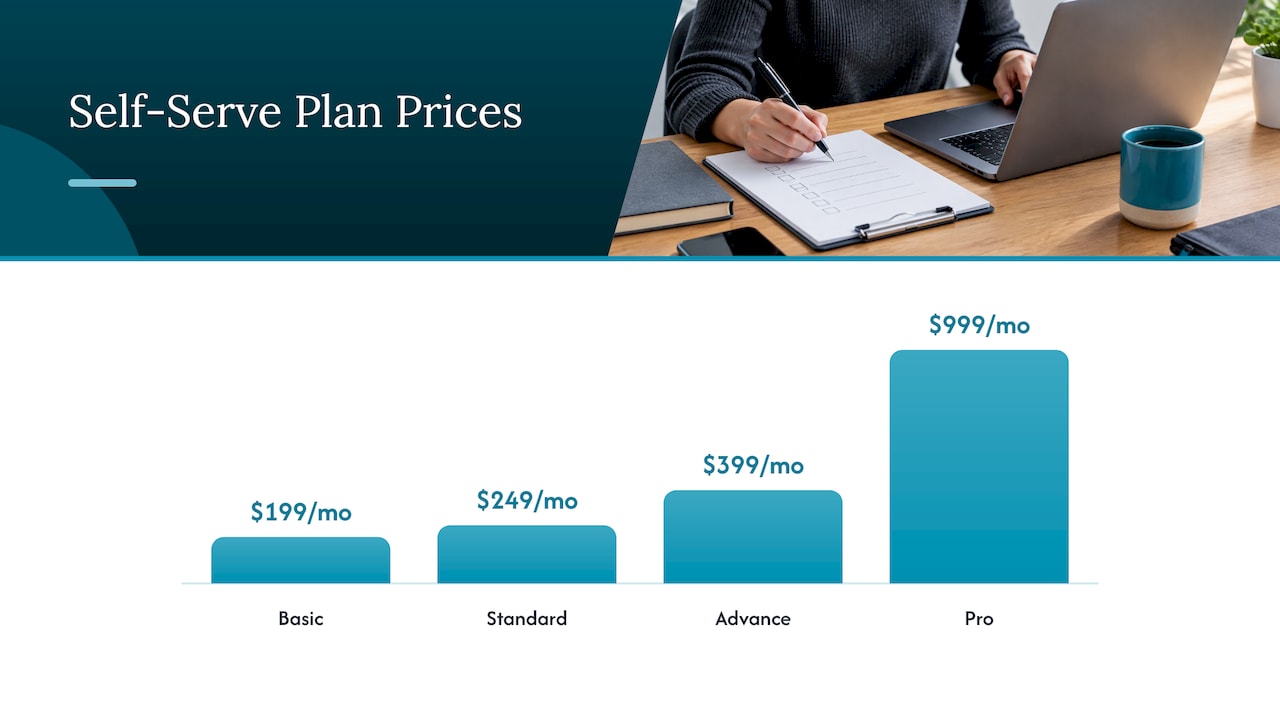
Teams can start with AI Voice Agents and AI Chat Agents, or review Vee Enterprise for regulated deployments. Published self-serve plans on the plans page range from Free at $0 per month, through Basic at $199 per month, Standard at $249 per month and Advance at $399 per month, to Pro at $999 per month. Chat sessions are priced at $0.18 per session, and a Pay As You Go option is available.
Private cloud and on-premise deployments, and enterprise integrations, are arranged through custom contracts.
Perspective
Governance is often presented as a brake on automation. In customer operations we see the opposite relationship: automation scales only as far as the organization can demonstrate control over it. A voice or chat agent that cannot be audited, restricted by role, deployed where the data must remain, and monitored across every channel will eventually be limited by the compliance function, and rightly so.
For that reason our platform is designed so that governance is a property of the system rather than a document beside it. Unified omnichannel automation means one policy set across voice, WhatsApp, SMS, email and web. Deployment in cloud, private cloud or on-premise environments gives regulated organizations full control of their data. Integration with CRM and telephony keeps agents tied to authoritative records, and no-code agent setup lets business and compliance stakeholders take part in design instead of receiving the result.
Our view is that enterprises should write the framework first, select the platform against it, and expect the platform to produce the evidence that the framework requires.
Voiceracx
FAQ
What is the difference between an AI governance framework and an AI governance policy?
The framework is the complete system of responsibilities, lifecycle processes, controls and monitoring. The policy is a written rule set inside it, covering matters such as permitted uses, data handling and human escalation. A framework makes a policy enforceable.
Who should own AI governance in an enterprise?
Accountability should sit at executive or board level, with a cross-functional committee carrying out the work and a named owner for each AI use case. Operations, security, legal, compliance and customer experience should all be represented, so that decisions reflect operational reality and regulatory obligations.
Which framework should a US enterprise use as a starting point?
The NIST AI Risk Management Framework is a common anchor, because its govern, map, measure and manage functions are organized around practical activities. Many enterprises add ISO/IEC 42001 for a management-system approach and layer sector and state requirements on top.
How does AI governance apply to voice and chat agents?
Each agent is entered in the inventory, assessed before launch, grounded in approved knowledge, given clear escalation rules and monitored after launch. Recording, analytics and audit trails provide the evidence that these controls operate in practice.
Sources
- AI Governance: A practical guide for organisations, Bird & Bird
- AI Governance Principles for Boards, INSEAD
- Practical Manual for Establishing AI Governance, Japan AI Safety Institute, March 2026
- Designing AI governance structures, University of Technology Sydney
- AI Operating Models Using Global Governance Frameworks, Kroll
- AI RMF Core, NIST AI Resource Center