Enterprise AI
The End of Unpredictable Freight Costs: How AI-Powered Visibility Redefines Logistics
Gain real-time visibility and better planning to control freight costs and reduce disruptions.

Vee Lite
Launch your AI agent in 15 minutes
Explore Vee Lite
Self-serve AI — pay as you go
Start free on Vee LiteFreight and logistics operations operate in one of the most volatile cost environments in global business. Fluctuating fuel prices, port congestion, route disruptions, inventory mismatches, and fragmented data systems make it difficult for logistics teams to predict costs accurately.
For many organizations, freight costs are not only high but also unpredictable. Finance teams struggle with forecasting. Operations teams react to issues after they occur. Customer support teams face increasing pressure to explain delays or cost variations.
The root of the problem is not simply transportation complexity. It is a lack of unified visibility across the logistics ecosystem.
AI-powered observability and data unification are transforming how logistics organizations monitor operations, predict disruptions, and control costs. By bringing together fragmented operational data and applying intelligent monitoring systems, logistics teams can move from reactive problem solving to predictive cost management.
This blog explores how AI-powered visibility is helping organizations eliminate freight cost unpredictability and build more resilient logistics operations.
Why Freight Costs Are Often Unpredictable
Logistics networks involve multiple stakeholders including carriers, warehouses, dispatch teams, vendors, and customers. Each participant generates operational data across different systems and communication channels.
However, most logistics organizations still manage this information through fragmented platforms.
Common operational challenges include:
- Shipment tracking data stored across multiple systems
- Delayed updates from drivers or third-party carriers
- Inconsistent communication between dispatch teams and vendors
- Limited visibility into delivery exceptions
- Manual reporting and reconciliation of logistics events
When logistics data remains fragmented, teams cannot identify cost drivers in real time. Issues such as route delays, missed deliveries, or rescheduling often escalate before operations teams become aware of them.
As a result, organizations face unpredictable freight expenses and reactive decision-making.
The Role of AI-Powered Observability in Logistics
Observability refers to the ability to continuously monitor systems, processes, and events to understand operational behavior in real time.
In logistics operations, AI-powered observability provides visibility into every stage of the shipment lifecycle.
This includes monitoring:
- Shipment movement and route performance
- Delivery confirmations and exceptions
- Vendor and driver coordination
- Customer communication and support interactions
- Operational delays and bottlenecks
AI systems analyze this data continuously, identifying anomalies, predicting disruptions, and recommending corrective actions before issues escalate.
For example, if a shipment is delayed due to route congestion, the system can automatically detect the delay, notify relevant stakeholders, and trigger alternative routing or rescheduling workflows.
This proactive visibility helps organizations avoid unexpected operational costs.
Data Unification Across Logistics Systems
Another major challenge in logistics operations is the fragmentation of data across multiple enterprise systems.
Logistics organizations often rely on separate platforms for:
- Transportation management
- Warehouse operations
- Customer support
- Dispatch coordination
- Vendor communication
Without a unified data architecture, teams cannot obtain a complete operational view of shipment performance or cost drivers.
AI-powered platforms address this challenge by consolidating logistics data into a single operational layer.
This unified data model enables organizations to analyze operational performance across multiple dimensions including route efficiency, delivery timelines, cost patterns, and customer interaction history.
With unified visibility, decision-makers can identify patterns that were previously hidden across disconnected systems.
Predictive Cost Intelligence for Freight Operations
Once logistics data is unified and continuously monitored, AI systems can begin generating predictive insights.
Predictive freight intelligence allows organizations to anticipate operational risks before they affect costs.
Examples include:
- Identifying routes that consistently cause delays or additional fuel consumption
- Predicting delivery failures due to weather or traffic conditions
- Detecting vendor performance issues that lead to service disruptions
- Forecasting shipment volumes that may affect capacity planning
By identifying these patterns early, logistics teams can take proactive steps to mitigate cost escalation.
Instead of reacting to disruptions after they occur, operations teams can prevent them from happening.
AI-Driven Communication Across the Logistics Ecosystem
Another significant source of freight cost inefficiency is communication delay between logistics stakeholders.
Dispatch teams often spend hours coordinating with drivers, vendors, and customers to confirm shipment status or resolve delivery issues.
AI-powered conversational systems can automate many of these interactions.
For example, intelligent voice and chat agents can:
- Provide real-time shipment status updates to customers
- Coordinate dispatch calls with drivers and delivery partners
- Confirm delivery completion and collect proof of delivery
- Handle rescheduling requests for missed deliveries
Automating these communications reduces operational workload while improving transparency across the logistics network.
Improving Operational Efficiency with Real-Time Visibility
Real-time operational visibility allows logistics teams to make faster and more informed decisions.
When teams can monitor shipments, communications, and operational events from a centralized dashboard, they can respond quickly to emerging disruptions.
For instance, if a delivery exception occurs, operations teams can immediately assess the situation, notify relevant stakeholders, and initiate alternative actions.
This prevents delays from cascading into larger operational disruptions that increase freight costs.
Real-time visibility also helps organizations optimize resource allocation by identifying underutilized routes, inefficient dispatch patterns, or recurring operational bottlenecks.
Enhancing Customer Experience in Logistics
Customer expectations for shipment transparency have increased significantly in recent years. Customers now expect real-time updates on delivery status, estimated arrival times, and shipment progress.
AI-powered visibility enables logistics companies to deliver these experiences consistently.
Customers can receive instant updates through voice or chat interactions, reducing the need for manual support requests.
For example, a customer can simply ask:
“When will my shipment arrive?”
The system can retrieve real-time logistics data and provide an accurate ETA instantly.
This level of transparency improves customer trust and reduces support workload for logistics teams.
Building a More Resilient Logistics Network
Unpredictable freight costs often indicate deeper operational inefficiencies. Without visibility into operational data, organizations cannot identify or correct these inefficiencies effectively.
AI-powered observability provides the foundation for a more resilient logistics network.
By monitoring operations continuously and analyzing data patterns across the supply chain, organizations can detect emerging risks early and implement preventive measures.
This creates a logistics system that is not only efficient but also adaptive to changing conditions.
The Future of Cost-Predictable Logistics
As global supply chains become increasingly complex, logistics organizations must adopt more intelligent operational systems to maintain efficiency and cost control.
AI-powered visibility represents a fundamental shift from reactive logistics management to predictive operations.
By combining observability, unified data intelligence, and automated communication systems, logistics teams can gain unprecedented control over shipment performance and freight costs.
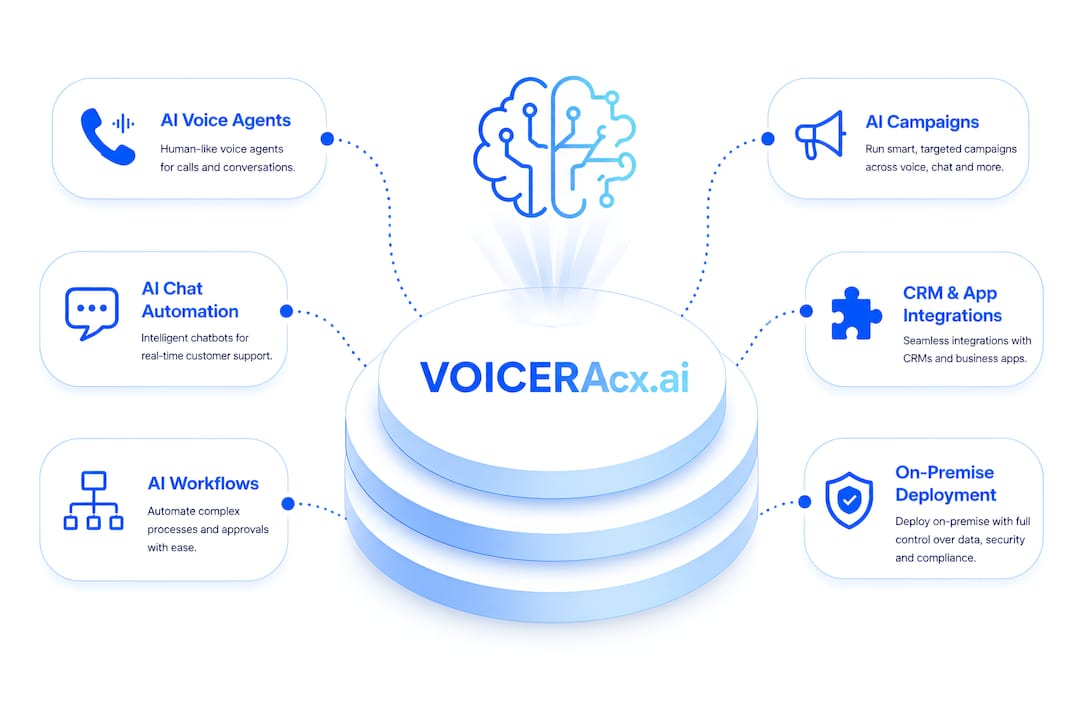
Platforms such as VOICERAcx help enable this transformation by integrating conversational AI, real-time observability, and unified operational intelligence into logistics workflows.
The result is a logistics environment where operations are transparent, disruptions are predicted, and freight costs become far more predictable.
For organizations seeking to build resilient and efficient logistics networks, AI-powered visibility is no longer a future ambition. It is becoming a core operational requirement.